
Garbage disposals have become standard in kitchens, and many people can’t imagine not having one. However, myths about what disposals can do end up creating a lot of plumbing problems. Disposals can be helpful appliances if you can use them properly.
What Garbage Disposals Are Meant to Do
A common misconception about garbage disposals is that they can grind up anything. Many people think disposals have blades similar to those in a blender. In their minds, the blades should be able to obliterate anything.
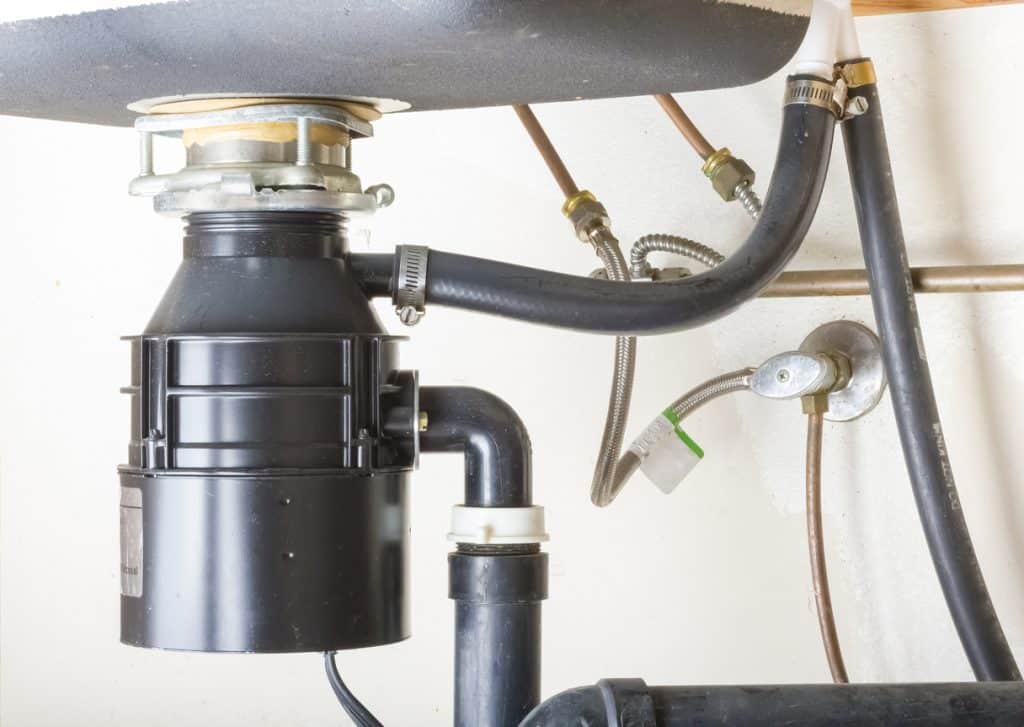
That’s not what garbage disposals are like. They don’t have blades, and they don’t grind up anything. Garbage disposals have impellers, two teethlike parts that sit on top of a round plate. When you put food into the disposal, the plate spins, and the impellers press the food against a grinding ring.
Garbage disposals are meant to grind up smaller bits of food that end up inside the drain. They can grind up larger chunks of some foods. But they are not meant to grind up any food. In fact, many foods cause disposals to jam, leading to clogs and bad odors.
The Benefits of Garbage Disposals
When you rinse off dishes, pieces of food end up in the sink. They run into the drain, and they can become caught on the sides of the pipe. Those pieces, no matter how small, can rot and lead to a stinky drain. Sometimes the food can create a clog if the piece is large enough.
Garbage disposals do two things. They stop larger pieces of food from falling all the way into the pipe. They also grind up the food to make it easier for the pieces to flow down the pipe and away from the home. If you’re using the disposal only for certain foods, it should do this job very well.
The Drawbacks of Garbage Disposals
However, the way people actually use garbage disposals is different. A lot of people throw anything into the disposal, including foods that create issues like cooked pasta. Starchy foods can leave residue on the impellers. This residue dries up quickly. If it dries in the wrong place, it can jam the impellers.
Other foods that can’t go in garbage disposals include coffee grounds because they have an effect similar to starchy foods. Bones are also bad because they can jam the impellers. Stringy foods like celery are also a problem.
You have to be careful about what goes into the disposal. Wipe dishes and pans out (into the garbage) before rinsing them off. Use a baking soda paste to scrub off greasy foods like oil or peanut butter, and place the used soda and debris in the garbage.
Whether you should get a garbage disposal depends on whether you use it correctly. It also depends on keeping food out of the drain. If you use a mesh drain net to catch food, and you regularly send hot water down drains to clean them, you might not need a disposal. However, if you want the ability to grind up those bits of food that do slip into the drain, a disposal could be a very good addition to your kitchen. If you live in Houston, TX or a surrounding area and need garbage disposal services, make your first call to Village Plumbing, Air & Electric.